Stanford Cardiovascular Medicine

From genetic risk to the artery wall.

We decode how inherited variation reshapes the smooth muscle, endothelial and fibroblast cells of human arteries — and how those changes cause coronary artery disease, the world's leading cause of death.

Illustrated cross-section of a coronary artery with an atherosclerotic plaque, drawn as a map of individual cells coloured by type.

Hover a cell type to find it in the plaque

Our approach

Following risk from DNA to disease

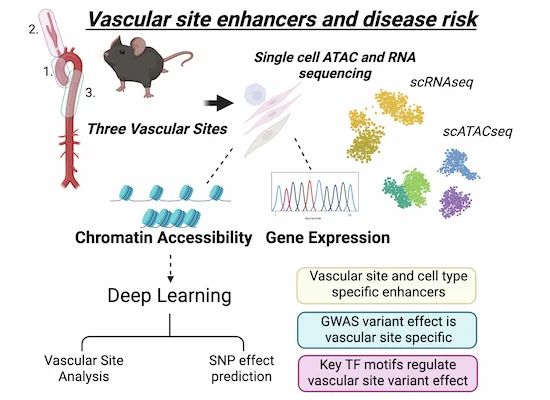
Each coronary artery disease locus is a clue. We trace it through the regulatory genome to a causal gene, to the cell state it controls, and finally to the biology of the plaque.

  1. 01 · VariantGWAS risk lociHundreds of loci from multi-ancestry CAD genetics
  2. 02 · EnhancerRegulatory elementSingle-cell ATAC, ChIP, HiChIP, QTLs, CRISPRi screens
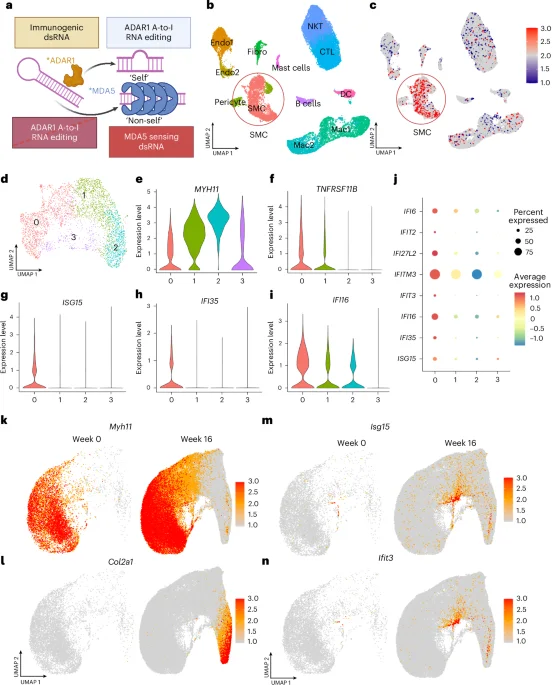
  3. 03 · GeneCausal geneTCF21, SMAD3, ZEB2, PDGFD, ADAR1, AHR …
  4. 04 · Cell stateVascular cell fateSMC → fibromyocyte, chondromyocyte; EC, fibroblast programs
  5. 05 · DiseasePlaque biologyStability, calcification, inflammation, remodeling
Selected publications

Recent discoveries

All publications →
Nat Commun2026

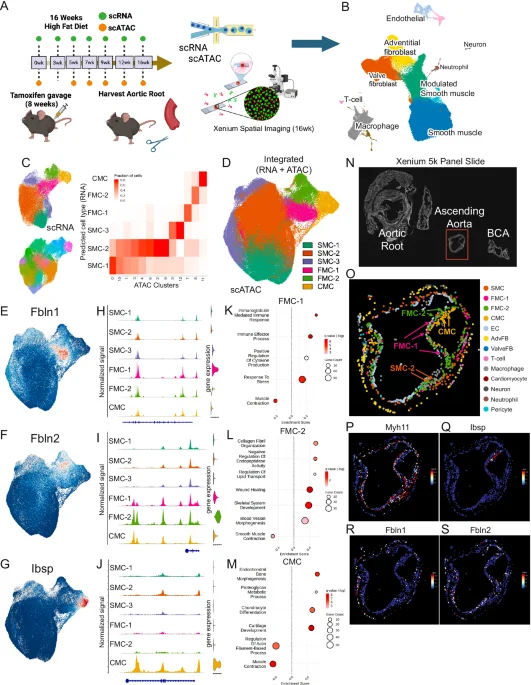
Vascular smooth muscle cell state trajectories mediate molecular mechanisms of coronary disease risk

A dense single-cell RNA + ATAC timecourse of mouse atherosclerosis traces smooth muscle cells as they transition into fibromyocyte and chondromyocyte states, identifies TCF21 and TEAD1 as regulators of these trajectories, and shows that CAD genetic risk concentrates in transitional SMC states.
Daniel Y Li, Soumya Kundu, Paul Cheng, …, Robert C Wirka, Thomas Quertermous

Cell Genom2025

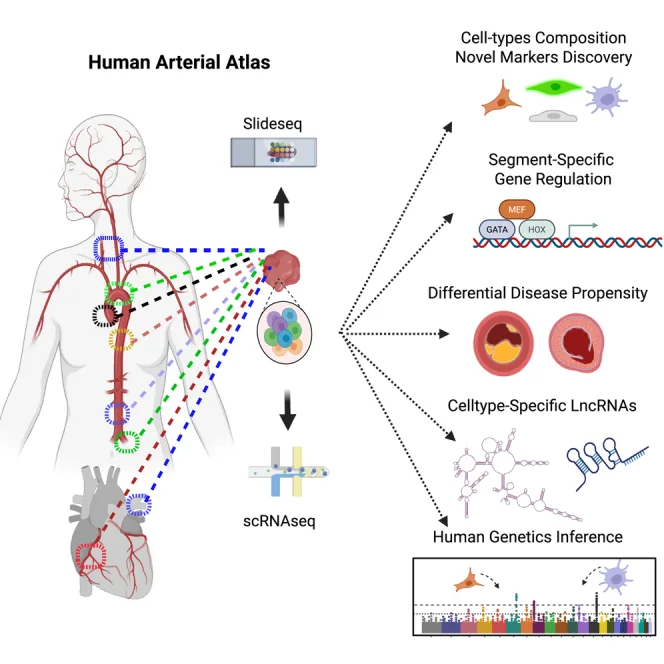
A cell and transcriptome atlas of human arterial vasculature

A single-cell and spatial atlas of eight human arterial beds reveals segment-specific smooth muscle, fibroblast and endothelial programs that reflect embryonic origin, and maps vascular disease GWAS signals onto these cell populations.

Quanyi Zhao, Albert Pedroza, Disha Sharma, …, Thomas Quertermous, Paul Cheng

Thomas Quertermous
Principal investigator

Thomas Quertermous, MD

William G. Irwin Professor of Cardiovascular Medicine
Director of Research, Division of Cardiovascular Medicine

Three decades of genetic studies of vascular disease — from multi-ethnic GWAS of coronary artery disease to single-cell mechanisms in the vessel wall. Dr. Quertermous has trained more than 30 alumni now leading labs and programs at Stanford, Columbia, Yale, UNC, UVA, Kobe, Kyoto and beyond.

Meet the team →

Join us

We welcome postdoctoral fellows, physician-scientists, graduate and undergraduate students who want to combine experimental and computational genomics to understand vascular disease.

Open positions & contact